The AI IDE that routes to the best model.
5 providers, 60+ agents, ML-driven routing. Nexus picks the right model for every task — so you ship faster without vendor lock-in.
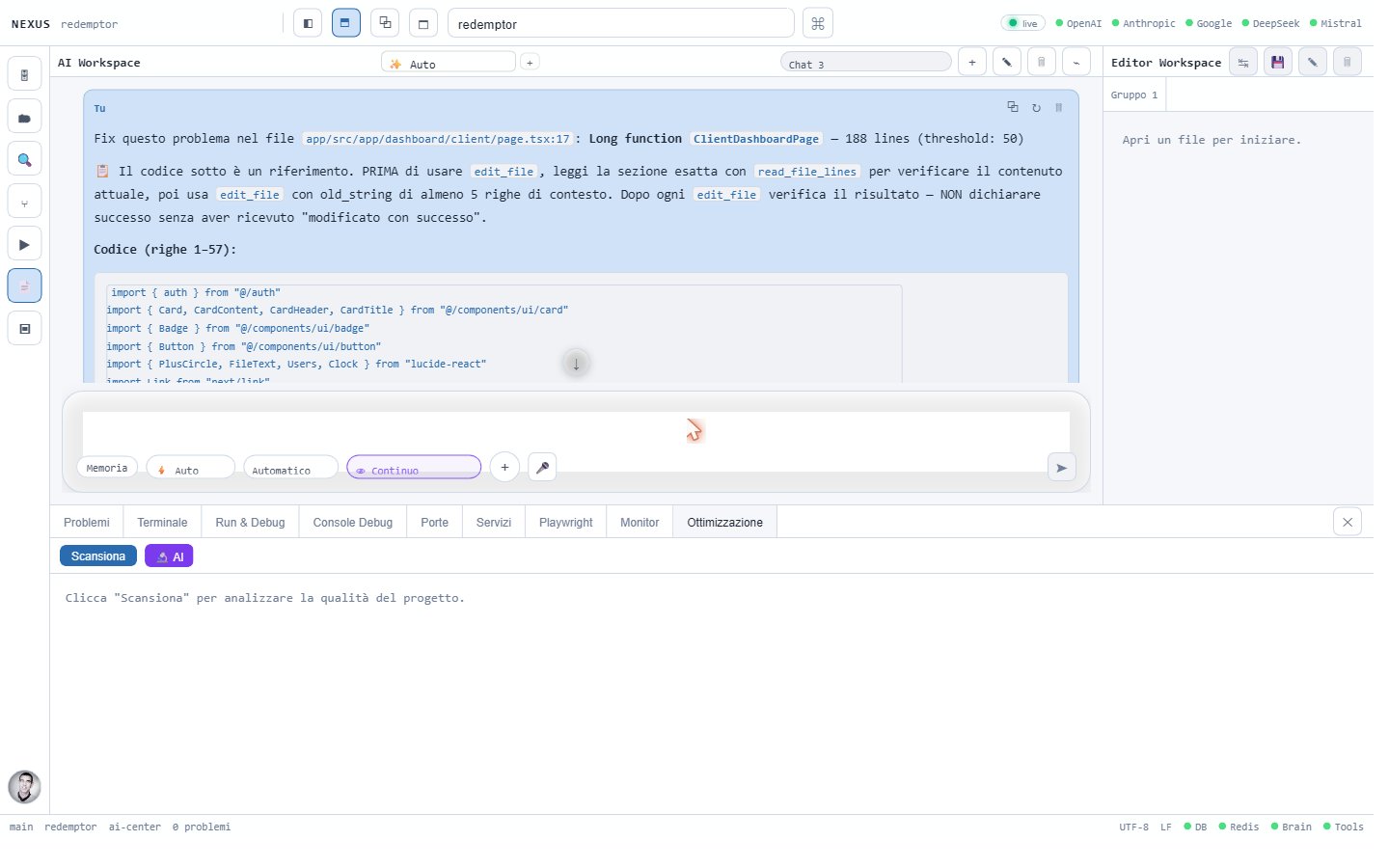
Your entire dev workflow, orchestrated.
Chat, editor, terminal, tests — unified under intelligent orchestration.
Built different.
Nexus doesn't just call one API. It routes every request through a Q-Learning matrix to pick the optimal provider and model — learning from every interaction to get better over time.
Agents that plan, act, and verify.
The orchestrator breaks complex tasks into a plan, executes each step with specialized sub-agents in parallel, then verifies the output matches intent. Autonomous multi-step reasoning with built-in quality gates.
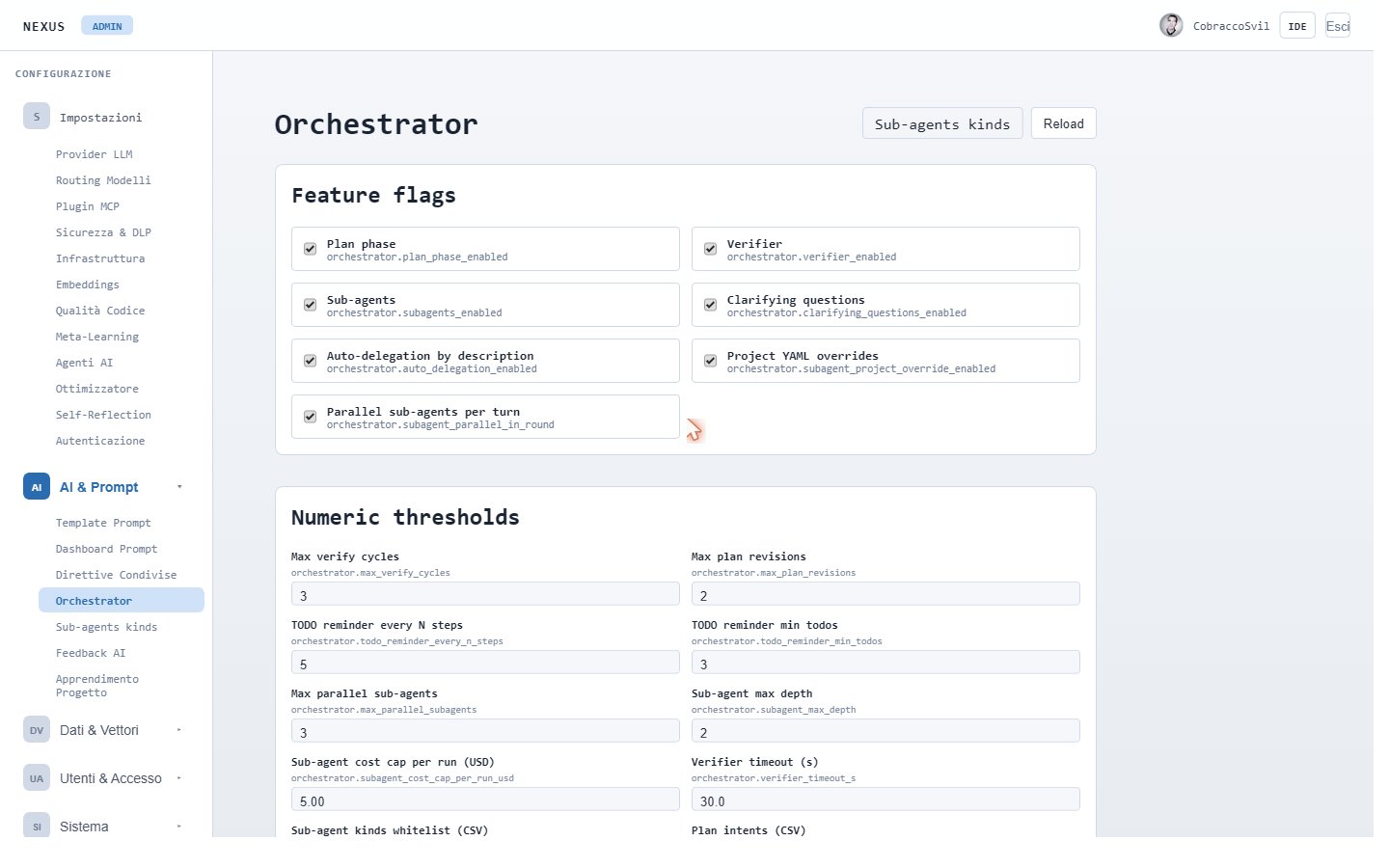
Multi-provider with cascade.
Five providers, one routing layer. If one hits quota or errors, the cascade falls through instantly — zero downtime, zero manual switching.
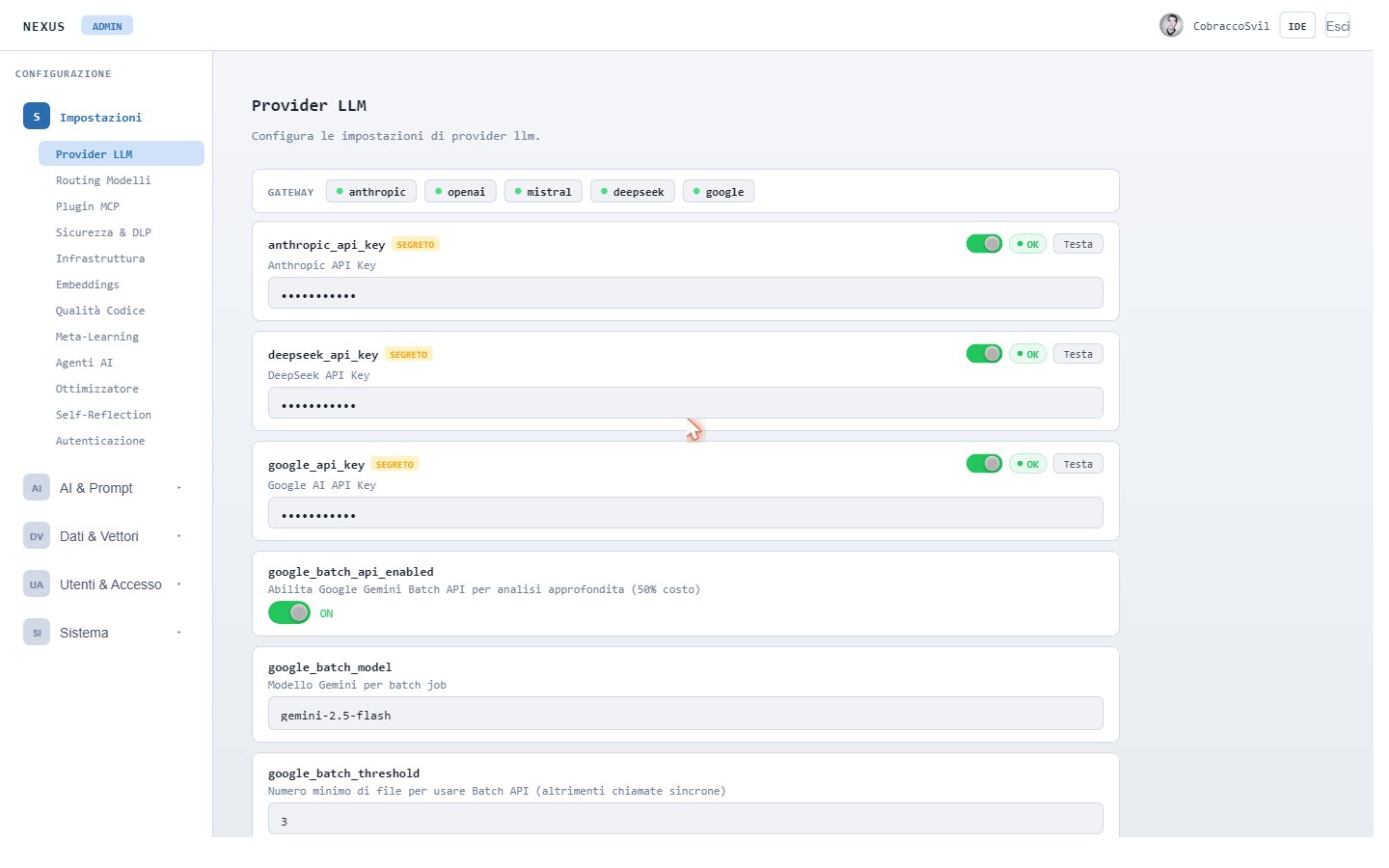
Integrations and tools.
Everything you need, built in.
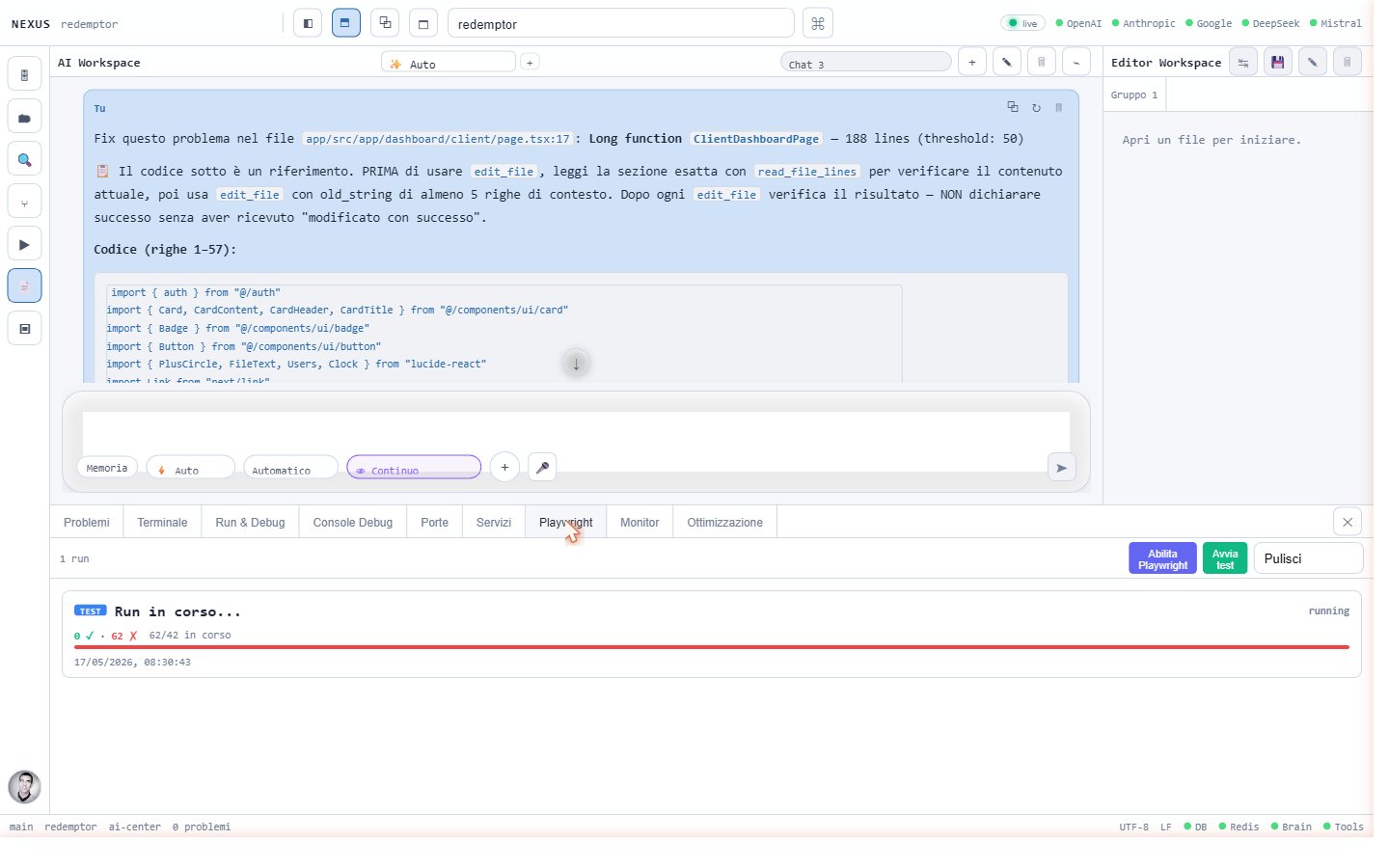
Live Test Monitoring
Playwright tests stream results in real-time. Watch pass/fail as they happen — no more waiting for the full suite.
GitHub Native
PR creation, branch management, issue tracking — agents manage your Git workflow end-to-end.
Integrated Terminal
Full shell access with AI-assisted commands. The agent can run, debug, and deploy without leaving the IDE.
Doc Generation
IEEE 830 specs, technical analysis, ER diagrams — professional documents generated directly from your codebase.
Persistent memory.
A reasoning bank powered by Q-Learning stores what works and what doesn't. Prompt corrections auto-apply, context compounds across sessions, and the system gets smarter the more you use it.
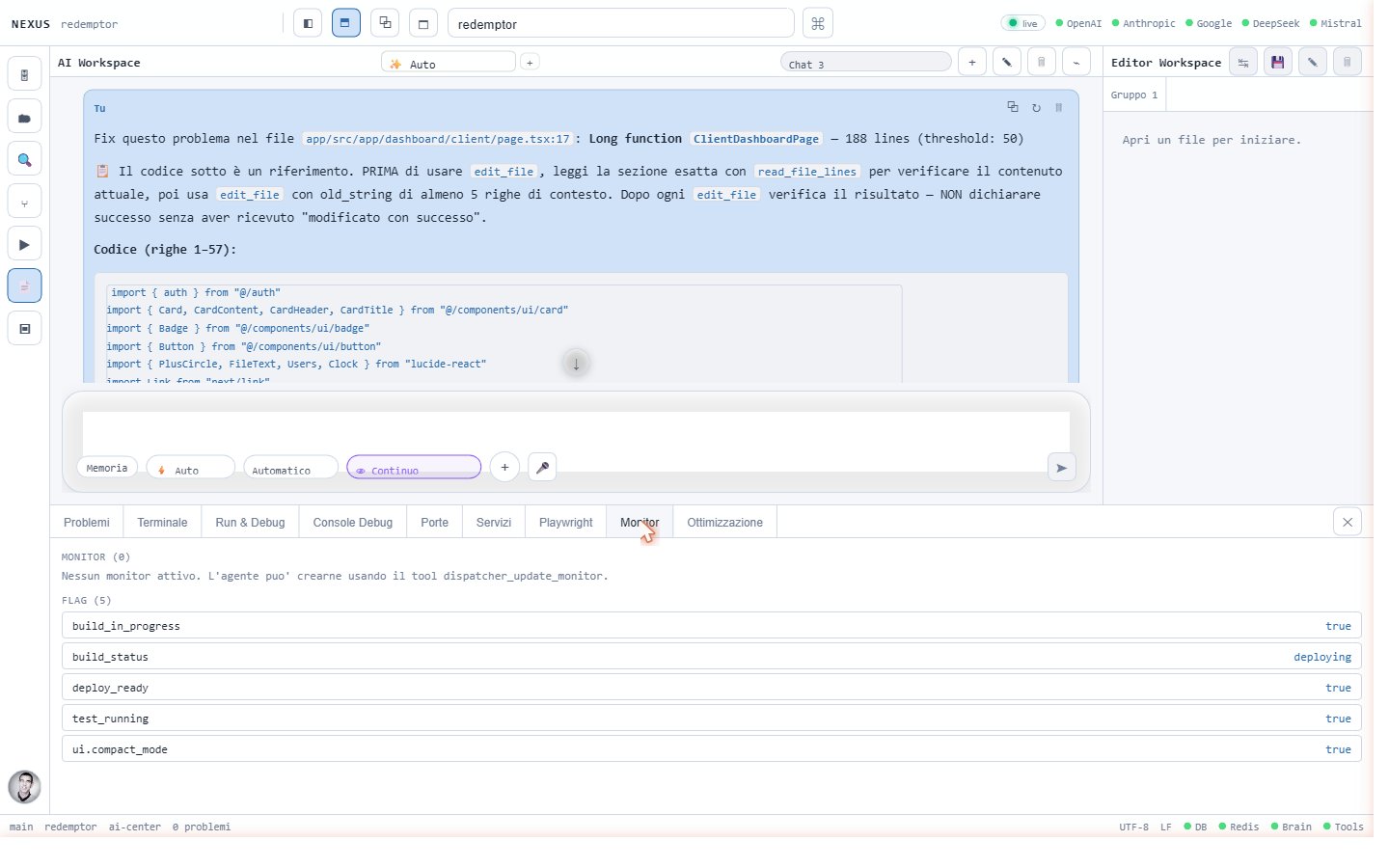
Per-project Knowledge Base.
Every request automatically becomes a persistent note — with intent, related files, and semantic links. An Obsidian-compatible vault lives inside your repo: YAML frontmatter, wikilinks, bidirectional sync. Browse it from the IDE sidebar, explore the interactive graph, or open it in Obsidian. The system builds your project memory — and makes it navigable.
- -Auto-created from every chat message
- -Obsidian-compatible vault (.md + YAML frontmatter + [[wikilinks]])
- -Interactive knowledge graph — pan, zoom, click to open notes
- -Semantic similarity banner to prevent duplicate work
- -Bidirectional sync: IDE, DB, and filesystem always in sync
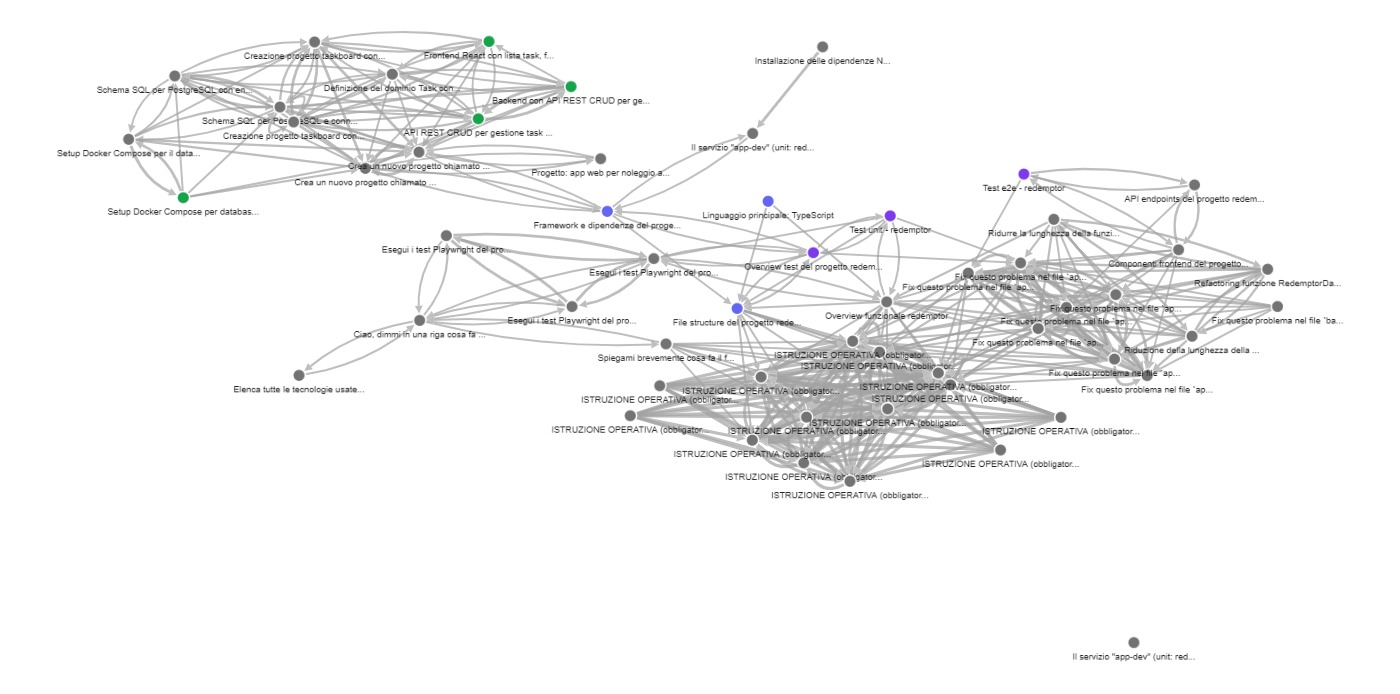
Multi-tenant, on-prem ready.
Complete project isolation with per-tenant databases, Docker sandboxing, DLP security layers, and full audit trails. Deploy on your infrastructure — your code never leaves your network.
Nexus vs. the market.
Compared to the most popular AI development tools — feature by feature.
What sets Nexus apart.
Beyond the comparison table — the architectural differences that matter in production.
Routing Intelligence
While Cursor uses simple Auto mode and Copilot assigns a fixed model, Nexus runs a Q-Learning router with HNSW similarity, slot-filling extraction and 4-level escalation chain — all data-driven from DB, zero hardcoding.
Data Sovereignty
Every competitor except Aider requires sending code to their cloud. Nexus runs entirely on your infrastructure: PostgreSQL, Redis, Qdrant, vLLM — complete control over where your code goes.
Cost Control
No credits, no opaque pricing. You use your own API keys with real-time token tracking, per-provider cost monitoring, prompt caching (90% savings on Anthropic), and configurable quota policies per user and project.
Project Knowledge Base
No competitor builds a navigable, persistent knowledge base from your interactions. Nexus auto-creates linked notes from every request, stores them as Obsidian-compatible Markdown with wikilinks, and warns you before duplicate work — a living project memory that grows smarter over time.